
9. Sun Exposure: Risks, Benefits, Protection, and Precautions
Some sun exposure is important for physical and mental health; however, like all things, too much can be a bad thing, particularly in Australia, where the sun can be harsher than it is elsewhere. Both the benefits and risks of sun exposure are the result of ultraviolet (UV) light that comes from the sun.
Benefits of Limited Sun Exposure
Sunlight helps your body make vitamin D. Vitamin D is important for strong bones and muscles, a healthy immune system, and a positive mood.
Many Australians don’t get enough vitamin D. Those most at risk are people with darker skin, those who spend most of their time indoors or covered up, and during winter, for those who live in the southern parts of Australia.
Getting some sunlight on your skin each day – especially mid-morning or mid-afternoon – helps. If the concentration of vitamin D in your bloodstream is low or you are at risk of low vitamin D, your doctor might recommend a supplement to keep your levels healthy.
People with deeply pigmented skin are at higher risk of vitamin D deficiency, especially in winter and in the southern part of Australia.
Risks of Sun Exposure
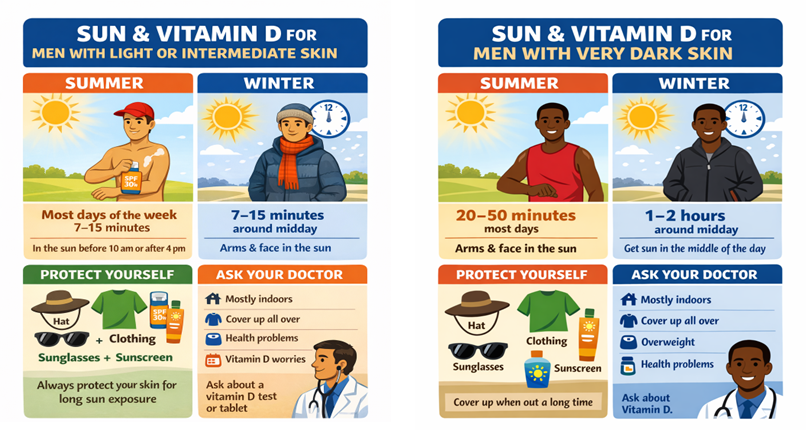
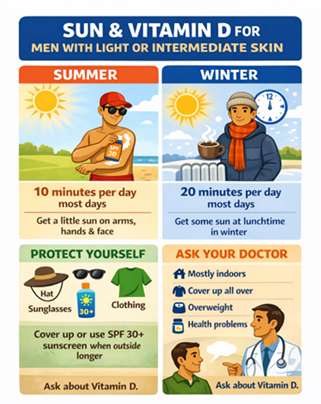
While spending time in the sun can be enjoyable, it is important to be aware that prolonged exposure can damage your skin. The immediate effect is sunburn. Even without burning, excessive sun exposure can lead to premature aging and increase the risk of skin cancer over time. For people with fair skin, more than 10 minutes per day in summer and more than 20 minutes daily in winter increases the risk.
People with very dark skin are at low risk of skin cancer compared with fair-skinned people
Safe sun exposure for men with very dark skin
If you have very dark skin, you need more sun exposure to make vitamin D. In South Australia, this is about 20–50 minutes on most summer days with your arms exposed, and about 1–2 hours around midday on most winter days.
Melanoma is a serious type of skin cancer. Australia has one of the highest rates in the world. It is more common in men, especially as they get older. It is usually caused by too much sun (UV exposure) over time. However, it can sometimes occur in area of the skin that are not exposed to the sun such as the palms of the hands, soles of the feet and under the nails. It can also sometimes occur at the back of the eye.
It can start as a new pigmented spot or a change in a pre-existing pigmented spot. Do not ignore new, enlarging, darkening or non-healing spots, even if your skin is dark.
Check your whole body regularly, including your hands, under your feet and your nails, where it may look like a dark line or colour change. If you see anything of concern, check with your doctor
MELANOMA FAST FACTS FOR MEN
Australia has one of the highest melanoma rates in the world. In 2025, about 17,443 new melanomas are expected in Australia, including about 10,187 in men.
Men with dark skin can still get melanoma. Between 2006 and 2020, melanoma incidence was about 51 per 100,000 for Australia-born people, but 3 or fewer per 100,000 for people born in Mauritius, India, Lebanon and Hong Kong
Men are at higher risk. By age 85, about 1 in 16 men in Australia will be diagnosed with melanoma. The risk for women is lower, at about 1 in 23.
Melanoma kills more men than women. In 2023, melanoma caused 1,527 deaths in Australia, including 1,038 men. The lifetime risk of dying from melanoma by age 85 is about 1 in 181 for men.
Early treatment saves lives. Melanoma is much easier to treat when found early. A new spot, or a spot that is changing, bleeding or not healing, should be checked by a doctor.
Protection from Sun Damage
To reduce the harmful effects of ultraviolet (UV) radiation from the sun, take the following protective measures:
- Time it Right: Avoid direct sun exposure during the hours when UV rays are strongest, typically between 10 a.m. and 4 p.m. If you must be outdoors during these hours, seek shade or use protective items like a wide- brimmed hat or umbrella to shield your skin.
- Use Sunscreen: Apply a broad-spectrum sunscreen with a sun protection factor (SPF) of 30 or higher. Be sure to reapply sunscreen every two hours, or more frequently if you’ve been swimming or sweating.
- Wear Protective Clothing: Dress in clothing that provides adequate coverage, and consider wearing UV-blocking sunglasses to protect your eyes from the sun. A wide- brimmed hat can also help protect your face, neck, and ears from UV radiation.
- Seek Shade: Whenever possible, spend time in shaded areas, whether it’s under a tree, an awning, or another form of shelter. This can significantly reduce your exposure to harmful UV rays.
- Stay Hydrated: Drink plenty of water when spending time outdoors, especially during prolonged sun exposure. Proper hydration helps maintain healthy, resilient skin.
Regular Skin Checks
Just as you would regularly check your vehicle for any issues, it’s important to check your skin for any unusual changes. Early detection is crucial for identifying potential skin cancer or other skin conditions.
- Familiarise Yourself with Your Skin: Take note of your moles, freckles, and any other marks on your skin. Perform a full-body skin check each month to monitor for any changes. Use a mirror to check hard-to-see areas, such as your back, scalp, and the soles of your feet.
- Consult a Healthcare Provider: If you notice any changes in the appearance of moles, freckles, or other marks — such as alterations in size, shape, colour, or texture — seek advice from your general practitioner (GP).
- Get Professional Skin Checks: If you have a history of sunburn or skin cancer in the family, ask for a check-up with a skin specialist (dermatologist). Regular visits to a skin specialist can help with the early detection of skin issues and prevent more serious conditions from developing.
Caring for your skin is not just about improving your appearance — it’s about maintaining your health. By taking proactive steps to protect yourself from harmful sun exposure and regularly checking your skin, you can reduce the risk of skin damage, premature aging, and skin cancer. So, be diligent about sunscreen, wear protective clothing, and stay mindful of any changes to your skin. Your future self will thank you for it