
16. Shiftwork and Your Health
Working night shifts, rotating rosters, or irregular hours can take a serious toll on your health – especially if you don’t get enough good-quality sleep. This kind of work disrupts your body’s natural rhythm (your circadian clock), making it harder to sleep well, eat regularly, and keep up healthy habits.
How Shiftwork Affects Your Body
When your body clock is out of sync for long periods, it can lead to:
- Poor sleep or insomnia
- Daytime fatigue and trouble concentrating
- Changes in mood and mental well-being
- Disrupted appetite and weight gain
Health Risks Linked to Long-Term Shiftwork
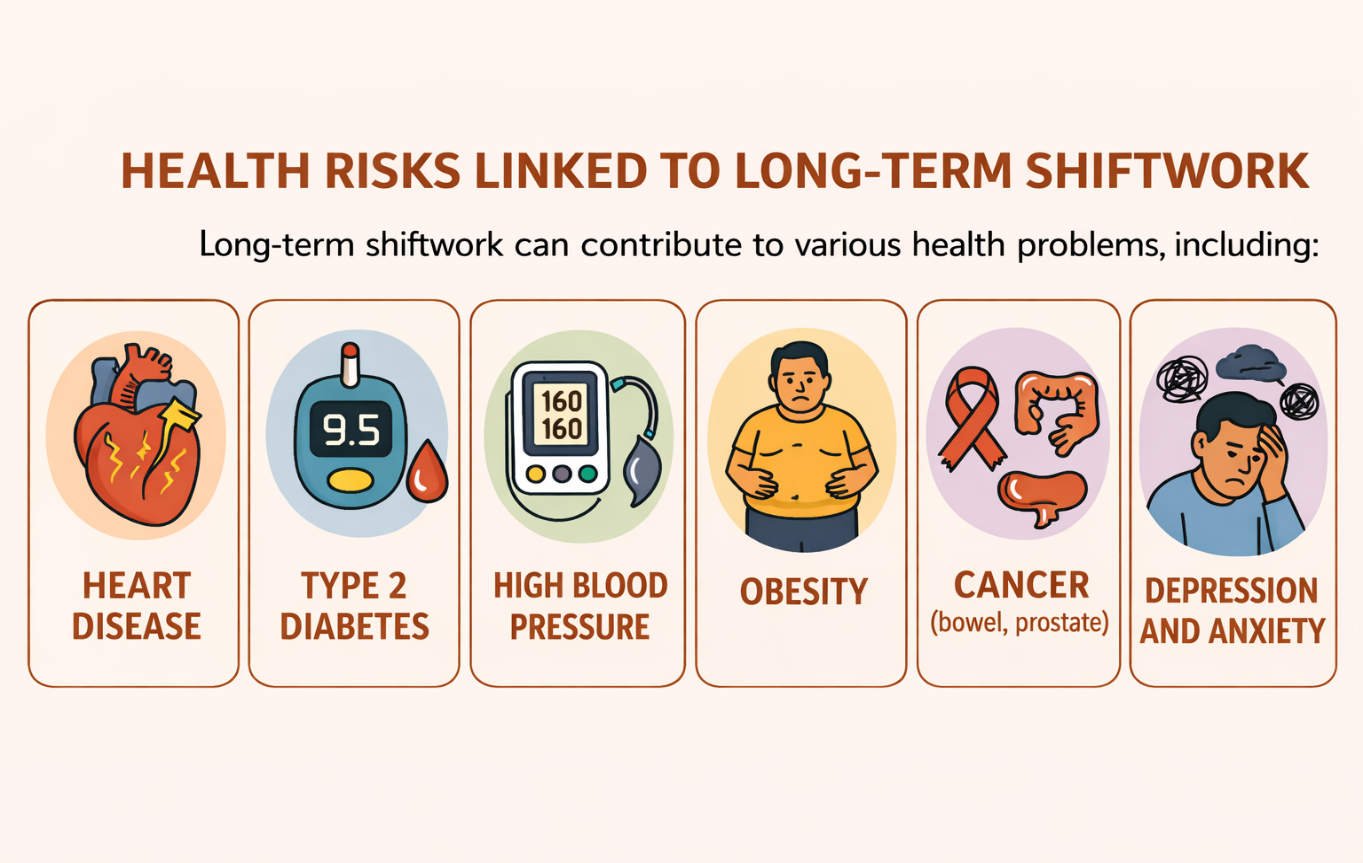
These risks are often higher in men who also smoke, take drugs, drink alcohol, eat irregularly, or don’t get regular check-ups.
Managing the Risks
Shift work doesn’t have to damage your health – there are things you can do to reduce the risk:
- Protect your sleep: Create a dark, quiet space for sleeping during the day. Use eye masks, blackout curtains, or white noise. Stick to a regular sleep schedule as much as possible, even on days off**.**
- Eat smart: Try to eat at the same time every day. Avoid heavy meals before bed and cut back on caffeine, alcohol, and meals close to bedtime.
- Choose your food carefully while on shift: Avoid processed carbohydrates (bread, pasta, noodles, pies and other baked goods). Choose small portions of meat, fish, chicken, legumes, salad, and nuts.
- Stay active: Even short daily walks or stretching can improve your energy and sleep quality.
- Regular health checks: Let your GP know you’re a shift worker – they can help you keep track of blood pressure, cholesterol, sleep quality and cancer screening.
Helpful Australian Resources
- Talk to your GP
Your doctor can monitor your health and refer you to a sleep clinic, dietitian, or psychologist if needed.
- Healthdirect Australia – Sleep and sleep apnoea
Evidence-based information on sleep, shift work, and obstructive sleep apnoea.
Website: https://www.healthdirect.gov.au/sleep
Website: https://www.healthdirect.gov.au/obstructive-sleep-apnoea
- Sleep Health Foundation – Sleep, OSA, and shift work
Information on sleep disorders and managing shift work.
Website: https://www.sleephealthfoundation.org.au
Website: https://www.sleephealthfoundation.org.au/sleep-disorders/obstructive-sleep-apnoea - Safe Work Australia – Fatigue and shift work
Guidance on managing fatigue and reducing risk at work.
Website: https://www.safeworkaustralia.gov.au/safety-topic/hazards/shiftwork-and-fatigue - Heads Up – Mental health at work
Information on stress, fatigue, and burnout.
Website: https://www.headsup.org.au
- Beyond Blue – Sleep and mental health
Information on the link between sleep, anxiety, and depression.
Website: https://www.beyondblue.org.au/mental-health/sleep
- Black Dog Institute – Sleep and mental health
Resources on sleep, mood, and managing fatigue.
Website: https://www.blackdoginstitute.org.au/resources-support/sleep/
- Heart Foundation – Sleep and heart health
Information on how sleep affects heart disease risk.
Website: https://www.heartfoundation.org.au/heart-health-education/sleep
- Diabetes Australia – Sleep and diabetes
Information on the relationship between sleep and blood glucose.
Website: https://www.diabetesaustralia.com.au/living-with-diabetes/health-management/sleep/
- **Cancer Council Australia – Shift work and cancer risk
**Information on long-term health risks associated with shift work.
Website: https://www.cancer.org.au/cancer-information/causes-and-prevention/workplace-cancer/shift-work - **NHMRC – Physical activity and sleep guidelines
**National guidelines for healthy sleep and lifestyle.
Website: https://www.nhmrc.gov.au/health-advice/physical-activity-and-exercise-guidelines - Lifeline Australia – Crisis support
24/7 support for distress or mental health concerns.
Website: https://www.lifeline.org.au o Phone: 13 11 14
Sleep is an important aspect of your health – protecting it and keeping it regular is one of the best steps you can take to preserve your wellbeing.