
3. Healthy Eating
Vegetables and Salads: Essential for Optimal Health
Incorporating plenty of vegetables and salads into your diet is one of the best ways to fuel your body with the nutrients it needs for optimal performance. Providing your body with the right nutrients is key to maintaining good health. Vegetables and salads are rich in essential vitamins, minerals, and fibre, which are important for feeling and being at your best.
Benefits of Eating Vegetables and Salads:
- Immune Support and Infection Protection: Vegetables and salads provide vitamins, minerals, fibre, and other beneficial compounds that help support normal immune function. This helps your body respond better to infections and may also reduce inflammation that contributes to many chronic disorders.
- Digestive Health: Vegetables and salad add fibre, which helps keep your bowels regular and prevents constipation and helps you feel full, which can aid in weight management.
- Muscle Strength and Endurance: Vegetables and salads provide key nutrients like potassium and magnesium, which are necessary for proper muscle function and recovery.
- Brain Function: Some vegetables, particularly leafy greens, contain nutrients that support brain health (memory, concentration, mood), and may reduce the risk of age- related cognitive decline.
Fast Facts - Benefits of eating more vegetables and salads
- ½ cup cooked vegetables or 1 cup salad/day vs none → ~20% lower stroke risk
- 1 cup leafy greens/day added → ~13% lower type 2 diabetes risk
- 1–2 cups leafy greens/day vs rarely/never → memory and thinking like someone ~11 years younger
- 1 cup cooked vegetables/day vs none → ~16% lower heart disease risk
Practical Strategies to Increase Salad and Vegetable Intake:
- Choose Seasonal Produce: Purchasing vegetables or salad items that are in season is often more cost- effective and ensures better flavour and quality.
- Frozen Vegetables Are a Good Option: Frozen vegetables or greens are often less expensive and retain much of their nutritional value, making them a convenient and affordable choice.
- Growing Your Own: If space permits, growing vegetables or salad items at home in a garden or even in containers can be a rewarding and cost-effective way to increase your intake.
- Enhance Your Meals: Add extra vegetables to dishes like soups, stews, casseroles, and stir-fries to increase their volume and nutritional value without significantly increasing costs.
- Select Healthy Snacks: Choose vegetables such as carrots, cucumber, or celery as snacks instead of less nutritious options like chips or sweets.
- Aim for Five Servings Per Day: Strive to consume at least five servings of vegetables or salad items daily. Your body will benefit from the wide range of nutrients these foods provide.
Incorporating a variety of vegetables into your daily diet is essential for maintaining good health. The benefits range from improved digestive health to disease prevention and enhanced cognitive function. By following simple, cost-effective strategies, you can ensure that you are providing your body with the necessary nutrients it needs to function optimally. Remember, the more vegetables you include in your diet, the greater the benefits for your long-term health.
Here’s a handy guide of some vegetable and salad items that you could consider:
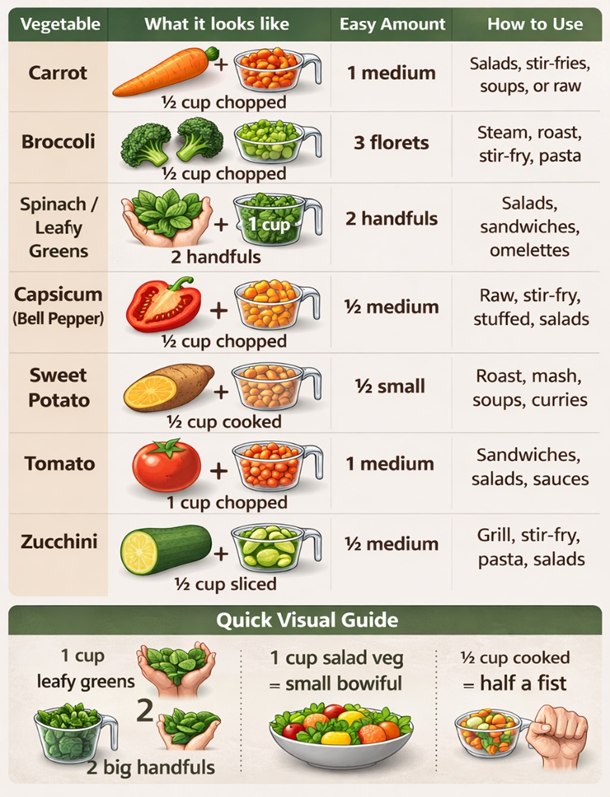
Make sure to wash vegetables, salad items and fruit before eating
Healthy Eating Patterns
Adequate intake of vegetables and salad items is just one part of a good diet.
You would not dream of putting ethanol blend fuel in a high-performance motor vehicle. Your body is a high-performance machine, and you need to fuel it right.
Fruit: One or two serves of fruit each day is also part of a healthy diet. Examples of the serve include a medium sized apple, banana, pear or peach etc. or a cup of grapes, strawberries, blueberries or diced watermelon.
Avoid highly processed foods: These include commercial breakfast cereals, biscuits, cakes, pastries, pre-made sauces, frozen or prepared meals. These foods increase blood sugar, have extra salt and other additives. and are linked to diabetes and heart disease.
There are better staples than bread, rice or pasta: Bread, rice and pasta are common foods, but they should be considered seldom foods for many men. Here is why - they are easy to overeat, they fill you up without giving you enough fibre or nutrients, and they can push up blood sugar more than alternate staples such as legumes (lentils, beans, chickpeas) and other grains (oats, barley, bulgur, quinoa). These alternate staples give your body more of what it needs (fibre and high-quality nutrients) and less of what it does not (sugar and salt). Fibre, helps fill you up, supports bowel health, slows the rise in blood sugar after eating and decreases inflammation. These foods also contain protein, which make meals more satisfying by increasing fullness. Unlike many breads, pastas and white rice dishes, legumes usually provide more nutrition for fewer problems with overeating.
Lentils, beans and chickpeas can be used in soups, stews, curries, salads, casseroles, mince dishes, or served as a side dish instead of a large amount of rice or pasta.
This does not mean you can never eat bread, rice or pasta. It means they should be consumed less often, in smaller servings, and not the centre of every meal. For many men, swapping some of these foods for legumes and vegetables can help with weight, blood sugar, blood pressure and cholesterol.
Drinks: Drink water or soda with some lemon instead of sugared drinks (sodas, fruit juice, flavoured milk, or cordial). This helps with weight control, control of blood sugar and benefits heart and brain health.
Meal timing and snacks:
Meal timing matters. For most men, the best pattern is 3 proper meals a day and no regular snacks. Try not to eat a large meal late at night. It is better to finish dinner earlier and then not eat for 12 hours overnight. For example, if dinner is at 7 pm, wait until about 7 am before eating again.
Snacking often means eating extra food that your body does not need. Find more information about healthy eating and healthy lifestyles here:
Avoid highly processed foods and refined carbohydrates or drinks including soft drinks and fruit juicie, flavoured milk, and cordial.