
5. Alcohol:
The safest amount is none
Before you reach for your next alcoholic drink, whether it’s a beer, glass of wine, or a spirit, it’s important to be aware of the potential effects on your health. The goal here is not to judge, but to provide clear and accurate information so that you can make an informed choice.
“One-night, big consequences”
Binge drinking is when you drink a large amount of alcohol in a short time – usually more than four standard drinks in one session for men, according to Australian Health Guidelines. It’s not just how much you drink over a week, but how much you drink at once that matters. Binge drinking can lead to immediate harms like accidents, injuries, violence, alcohol poisoning, and unsafe sex – things that can happen in a single night.
Alcohol can lead to accidents, social and marital problems and over time, alcohol can damage your liver, brain, heart, and cause diabetes.
Let’s take a closer look at the impact of alcohol on your well-being:
Increased Abdominal Fat (Beer Belly)
Frequent drinking can lead to weight gain, particularly around the abdomen. This affects your appearance and increases the risk of developing various health conditions, including type 2 diabetes, liver disease, and cardiovascular problems.
Brain Function
Regular alcohol consumption can negatively affect memory, decision- making abilities, and overall cognitive performance.
Reducing alcohol intake can help keep your mind sharp.
Sleep Disruption
Even small amounts of alcohol cause disruption of sleep even if you feel drowsy. It does this by interfering with your sleep cycles, leading to lighter and less restorative sleep. Skipping the nightcap could help you wake up feeling more refreshed and better prepared for the day ahead.
Heart and Blood Vessels.
Coordination and Balance.
Risk Taking.
Regular alcohol drinking raises blood pressure and increases the risk of heart disease.
The blood vessels necessary will erections can also be adversely affected and so avoiding alcohol can maintain healthy sexual function.
Alcohol affects coordination and reaction time, increasing the likelihood of accidents, falls, or embarrassing situations. Maintaining control of your physical and mental fitness is important for both safety and social interactions.
Alcohol increases confidence but impairs judgment and decision-making. This can lead to risky behaviours with serious consequences, for example accidents, or violent behaviour
Liver Health.
Cancer.
Money.
The liver works hard to purify the blood. Alcohol places an unnecessary strain on this vital organ. Regular drinking increases liver fat and can ultimately lead to a liver that doesn’t work effectively or even liver cancer
Alcohol consumption is linked to a higher risk of developing many types of cancer, including prostate, liver, and bowel cancer. There is no “safe” level of alcohol when it comes to cancer risk.
Alcohol is expensive. The money saved by not buying alcohol could be put to much better use.
Some men drink to cope with stress or mental health problems. It may seem to help at first, but it usually makes things worse at home, at work, and how you feel about yourself
Some alternative ways to socialise:
- Alcohol is often used as a tool to socialise. There are many ways to interact with friends and family without alcohol. These can include:
- Drinking Tea, coffee or a traditional or other non-alcoholic beverage with friends.
- Having a meal together (such as a potluck dinner or dining out)
- Physical activity, which can include walking, fishing, group sports (soccer, cricket, etc.) or even beach outings.
- Begin new group hobbies such as gardening or forming/joining groups with shared interests (such as book clubs, car enthusiast groups)
- Finding social events to attend, like music, cultural events or art exhibitions
- Games and entertainment: Board or video games, watching movies or even trivia games.
Focus on connecting with people and sharing experiences, It’s a great idea to rotate between different activities and use these experiences to foster genuine connection with friends and family
Tips to cope when you are in an environment where other people are drinking
- Hold a non-alcoholic drink so people are less likely to offer you alcohol.
- Say no clearly and simply: “No thanks, I’m okay.”
- Have a reason ready if that helps: “I’m driving,” “I’ve got work tomorrow,” or “I’m taking care of my health.”
- Stay with supportive people who will not pressure you to drink.
- Leave early if people keep pushing alcohol.
- Plan ahead: decide what you will drink and how many.
- Eat food first and drink water or soft drink instead of alcohol.
- Suggest something else to do that does not revolve around drinking.
How to approach and help a family member, friend or colleague
- Choose a good time. Talk when they are sober, calm, and not in a rush. Do not have the conversation if they are drunk, aggressive, or violent. Keep yourself safe.
- Speak in private, in a quiet place. Start in a calm, caring way.
- You could say: “I care about you. I’m worried that drinking is causing problems for you.” Do not shame, blame, or argue.
- Explain what you have noticed. Mention concerns about drinking and its effects on health, mood, family, money, or work.
- Give them time to talk. Listen carefully, even if they do not agree.
- If they are open to it, encourage them to get help. Suggest a GP, counsellor, or alcohol and drug service. You could finish by saying: “You do not have to deal with this on your own. Help is available.” Let them know about the help services are listed below. Offer practical support, such as helping make an appointment or going with them.
Fast Facts about alcohol and health
- 1 in 4 Australian adults (26.8%) and 1 in 3 men (35.8%) drink excessive amounts of alcohol (10 or more drinks a week or 4 on any one occasion). The Australian guideline is not a safe threshold. It is a risk-reduction guideline. Even within the guideline, risk is not zero. Risk goes up bit by bit as drinking goes up.
- Alcohol caused 1,765 deaths in Australia in 2024. Men account for most alcohol deaths and hospitalisations
- Alcohol contributed to 5,800 new cancer cases in Australia in 2020.
- In Australia, alcohol causes 4.5% of all premature death and ill health
- Each extra 7 drinks per week increases risk of death from:
- alcohol-related cancers by 12%
- digestive disease by 32%
- cardiovascular disease by 7%
- any cause by 6%
In Australia - drinking more than 10 drinks per week was associated with an 8.5% higher absolute risk of death by age 85 in men and 4.1% higher in women, compared with drinking less than 1 drink per week.
A better life is waiting
Moderating or ceasing your alcohol consumption can have significant benefits for your physical and mental health. From improving sleep quality and cognitive function to reducing the risk of chronic diseases and enhancing financial savings, reducing alcohol intake can lead to a healthier, more balanced lifestyle. Make informed choices that prioritize long-term well-being over short-term gratification
Where to get help
If you or others are looking to stop drinking, there are several supportive resources available in South Australia to help you on your journey. These services are designed to be accessible and respectful of different cultural backgrounds, ensuring everyone receives the support they need.
Here are some key resources:
Alcohol and Drug Support Service (ADSS):
Offers free, confidential counselling and treatment tailored to individual needs.
Contact: 1300 13 14 44
Website: sahealth.sa.gov.au
Alcoholics Anonymous (AA):
Provides peer-led support groups for men seeking to stop drinking, with meetings available across South Australia.
Contact: 1300 222 222
Website: aa.org.au
South Australian Alcohol and Drug Information Service (ADIS):
A helpline offering advice, information, and referral services in multiple languages.
Contact: 1300 13 14 44
Website: sahealth.sa.gov.au
Culturally and Linguistically Diverse (CALD) Community Health Services:
Provide tailored support and programs for people from diverse cultural backgrounds.
Contact: Check local CALD health services directory or contact your local health clinic
Website: sahealth.sa.gov.au (search for CALD services in your area)
Local GP and Aboriginal Health Services:
Offer personalised treatment plans and culturally appropriate care for alcohol and health management.
Contact: Reach out to your local clinic or community health centre
Website: findahealthservice.gov.au
Online resources:
Provide accessible information and support options.
Beyond Blue: beyondblue.org.au
Drinkaware: drinkaware.com.au
Remember: Help is available. A first step can be talking to a GP or someone you trust.
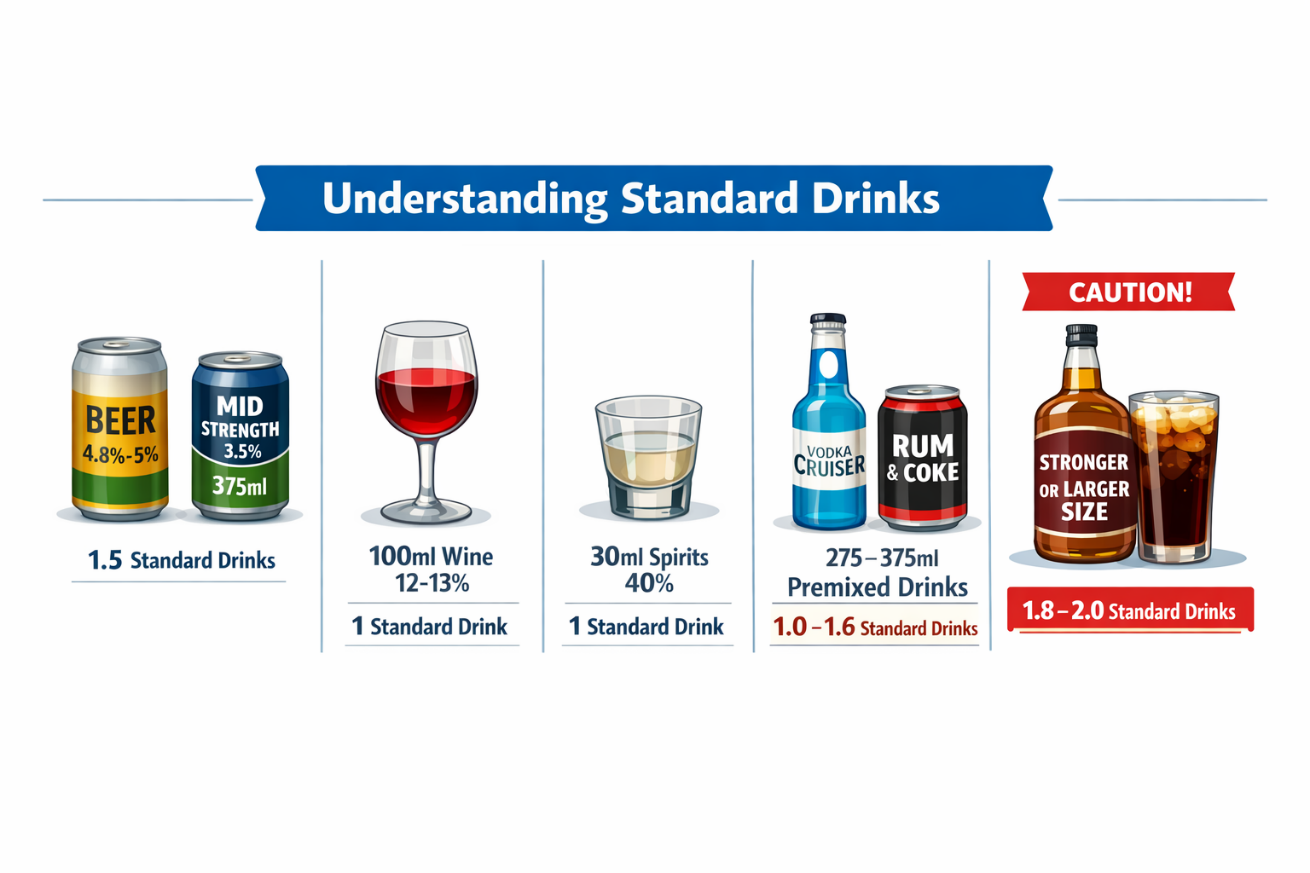
What is a standard drink?
In Australia, one standard drink contains 10 grams of pure alcohol, regardless of the type of alcohol. Because drinks come in different sizes and strengths, what looks like it is one standard drink contain much more than 10g of alcohol.
- A full-strength beer 4.8-5% (375ml) is about 1.5 standard drinks/ A mid strength beer is 1.0 standard drink
- A small glass of wine 12-13% (100ml) is 1 standard drink.
- A nip of spirits 40% (30ml) is also 1 standard drink,
- Premixed drinks (e.g., vodka cruiser, rum & coke) are typically 1.0–1.6 standard drinks per bottle/can (275–375 mL). Some stronger or larger formats can approach ~1.8–2.0 standard drinks
Always check the label – it’s easy to underestimate how much you’re drinking.