
7. Waist Circumference: A Vital Indicator of Your Health
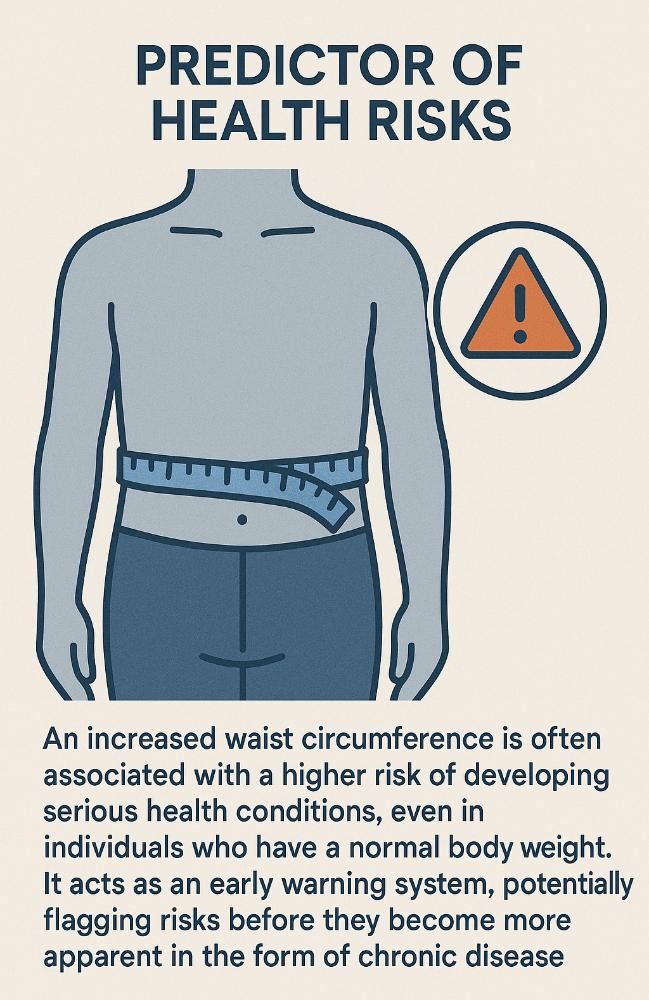
Waist circumference is easy to measure and is an indicator of overall health and risk for many serious diseases.
Why Waist Circumference Matters
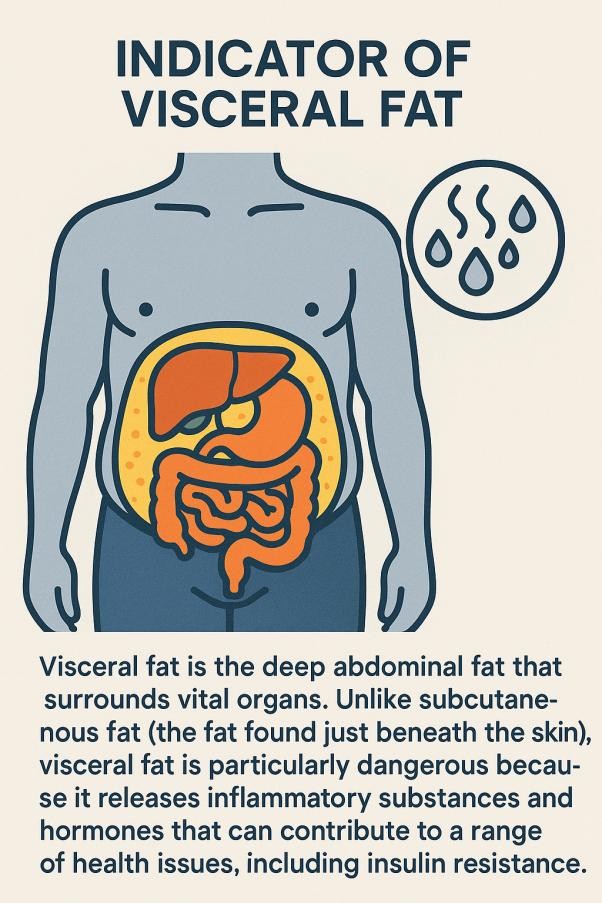
This simple yet powerful measure provides valuable insight into the amount of fat stored in your abdomen. This “abdominal fat or belly fat”, also known as visceral fat, doesn’t sit there passively—it releases harmful substances linked to inflammation, diabetes, high blood pressure, heart disease and cancer.
 How to Measure Waist Circumference
Measuring waist circumference is a quick and easy way to assess your risk for chronic health disorders. It can provide insight into whether you may be at higher risk for conditions such as heart disease, type 2 diabetes, and many more conditions.
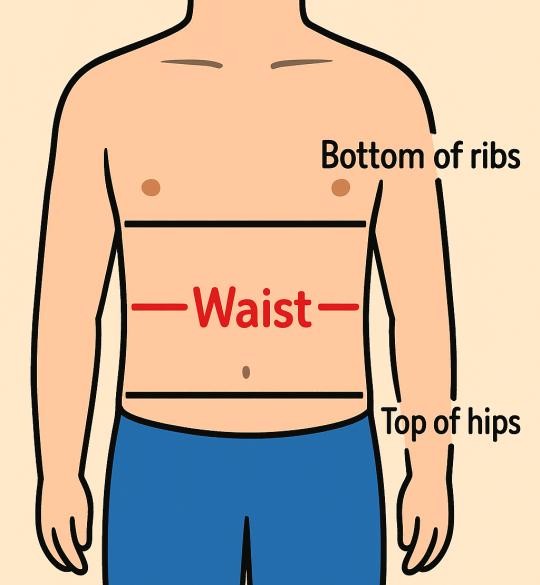
To find your waist, find the middle point between the top of your hips and the bottom of your ribs (see right).
Place a tape measure horizontally around this point and
Read it from the side.
The recommendations for healthy waist circumference vary slightly based on ethnic group, but generally for many racial groups of men <94cm is considered healthy, however for men from South-East Asia, China <90cm, and Aboriginal men <90cm, for Japanese men <85cm, and for Ethiopian men <87cm.
The Impact of Excess Abdominal (belly) Fat
Excess fat in the abdomen is not only about how you appear in your clothes; it plays a significant role in the development of various chronic health disorders:
- Metabolic Syndrome
Metabolic syndrome is a cluster of conditions associated with excess fat in the belly. These conditions include high blood pressure, elevated blood sugar, abnormal blood fats, and increased liver fat. Often, there is also a low serum testosterone (male sex hormone) concentration. Individuals with metabolic syndrome are at a higher risk of developing heart disease, stroke, type 2 diabetes, many cancers, and weak erections. It is also associated with obstruction to breathing during sleep, a condition known as obstructive sleep apnoea.
- Chronic Inflammation
Visceral fat actively releases substances that cause inflammation. This inflammation also increases the risk for heart disease, stroke, type 2 diabetes, weak erections, and many cancers.
- Hormone imbalance.
Reduced blood concentration of the male hormone testosterone
- Sleep and liver disorders
Obstructive sleep apnoea – a condition where the airway collapses during sleep. This causes the oxygen concentration in the blood to decrease. If it occurs many times during the night, it can damage the brain. Heart, sexual function and fatigue can cause accidents
Liver disease – accumulation of liver fat can cause liver inflammation, and damage to liver cells so that they are replaced with fibrous tissue lading to liver failure and an increased risk of liver cancer.
- Type 2 Diabetes
For your body to use sugar circulating in the blood as a fuel supply, to store fat, and to build protein, your body relies on insulin, a hormone made by the pancreas. In type 2 diabetes, your cells become resistant to the action of insulin and over time, the pancreas cannot keep up. This leads to an increase in blood sugar, breakdown of fat, as a result high amounts of fats in the blood, and there is also breakdown of protein, mostly from muscle. It is a whole-body metabolic disorder, not just a blood sugar problem.
Common indicators (signs) include feeling tired and thirsty, peeing a lot, having blurred vision, slow healing cuts or wounds, and weight loss. - However, particularly early during the disorder, there may be no symptoms at all.
It is more common in men than in women, and the risk of developing diabetes increases with increasing age.
Know your risk factors
Risk factors for diabetes and also heart disease include a family history (genetics), excess abdominal fat, lack of physical activity, unhealthy eating, alcohol, smoking, shiftwork, and obstructive sleep apnoea.
You cannot change your family history, but you can do something very positive about all the other risk factors. If you do have a positive family history, then it is extremely important to deal with the other risk factors vigorously.
Type 2 diabetes is preventable and if treated early it is reversible. At any stage you can either prevent or substantially improve complications with modern medications and positive lifestyle related health behaviours.
If you are at risk:
- See your GP and get screened — a simple blood test can pick it up before harm is done
- Act early — before symptoms appear
- Take these steps to prevent it, reverse it, or improve control and prevent complications
- Eliminate highly processed foods, avoid fruit juice, other sugar drinks, snacking and eating late at night, smoking, and avoid alcohol
- Walk for at least 30 to 40 minutes each day and for some of the time walk very briskly and in addition it is important to get resistance exercise to make your muscles work better.
- Take medications if advised —modern medications are very safe, support both sugar control and weight loss.
- Get regular follow-up.
Monitoring your waist circumference is a simple yet powerful step in understanding your health. It offers a window into your risk for a variety of health issues and provides an early indication of potential problems.
What can you do if your waist circumference increases?
- Ask your GP for a thorough health check
- If you drink sugary drinks, fruit juice, or flavoured milk – stop and rather drink water.
- Avoid alcohol if you drink it
- Avoid processed foods and snacking. Processed foods are generally those that come in packets, boxes and tins. Rather eat fresh whole foods and plenty of vegetables and salads
- Increase physical activity