
18. Erectile Dysfunction (ED)
Erectile dysfunction (ED) refers to the difficulty men experience in achieving or maintaining an
erection firm enough for sexual activity. It’s often frustrating, embarrassing, and can lead to stress or anxiety, which may worsen the condition. However, ED is not just a minor inconvenience – it can be a warning sign of serious health issues that need attention.
ED is common and becomes more common with increasing age.
Although ED becomes more common with increasing age, it does not mean that the cause is age in and of itself, but rather due to risk factors and common disorders that accumulate with increasing age
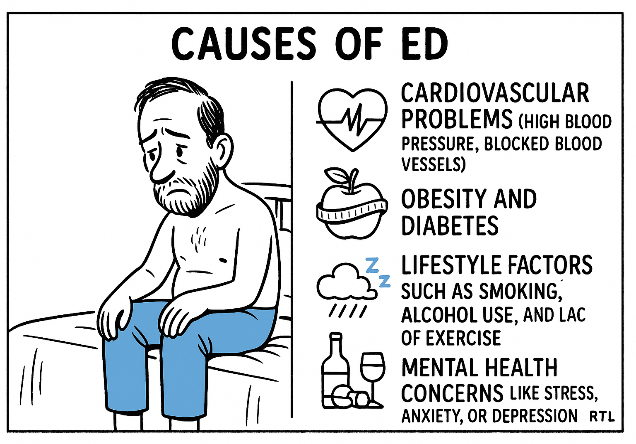 Causes of ED: ED is a signal that something in the body is not functioning properly, much like a “check engine” light in a car. It can be linked to underlying issues, including:
- Cardiovascular problems (high blood pressure, blocked blood vessels)
- Obesity and diabetes
- Sleep apnea
- Lifestyle factors - smoking, alcohol use, lack
of exercise
- Mental health concerns like stress, anxiety, or depression
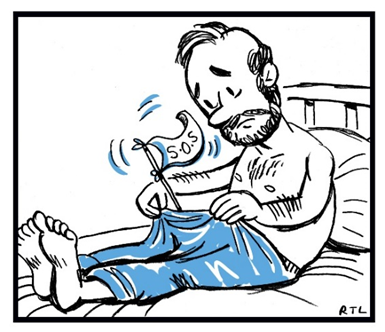
Health Risks Associated with ED: ED is not just a bedroom issue. It is a strong indicator of a risk for subsequent disorders:
- Heart disease
HEALTH RISKS
Heart disease
Stroke
Diabetes
Depression
- Stroke
- Diabetes
ED is like a canary in a coal mine; it warns of serious problems and provides a signal to intervene promptly. Ask your GP for help.
Impact on Quality of Life: ED can take a significant toll on a man’s mental and emotional well-being. It can affect self-confidence, cause relationship strain, and impact overall quality of life.
The good news is that ED is treatable. While medications like Viagra can provide temporary relief, addressing the underlying causes of ED is crucial for long-term health and well-being. Seeking advice from a general practitioner (GP) is the first step.
A thorough check-up can help identify the underlying causes, whether they are physical or psychological. Remember, it’s important to approach ED as a health issue, not just a performance issue.
Erection Problems Fast Facts
- 1 in 2 men over the age of 40 have some degree of ED. Early treatment prevents progression
- 15% of men under 45 experience some form of ED
- 30% of men aged 55–64 have mild to moderate ED.
- 70% of men aged 55–64 have moderate to severe ED
- Complete ED affects 5% of men aged 40 years increasing to 15% age 70 years
- ED may come 2–5 years before heart attack or stroke and should be considered a warning
- Men with ED have about a 45% higher risk of cardiovascular disease, a 55% higher risk of heart attack, and a 36% higher risk of stroke than men without ED
- About 66% of men with diabetes have ED.
- Depression is linked to about a 39% higher risk of ED, while men with ED have about a 2.9-fold higher risk of depression
- Smoking raises ED risk by 51%
- Adopting positive lifestyle change improves sexual function, or at the very least prevents deterioration
ED is a common but serious health concern, not a trivial matter. If you experience difficulties in the bedroom, don’t ignore it. Speak with your GP, explore treatment options, and take steps to improve your overall health. Remember, these visits are confidential.
By addressing ED, you can improve your sexual health, restore confidence, and lower the risk of more severe health problems.