
13. Friendships, Personal Relationships, and Family Difficulties
Friendships:
- The Importance of Friends: Friends are essential because they offer support, companionship, and a sense of belonging. Good friends can make you feel happy and less alone, particularly when you’re going through tough times. The act of helping friends also makes you feel good about yourself and strengthens your bonds.
- Loneliness and Mental Health: Without friends, men are more likely to feel isolated, stressed, and at risk of developing depression or other mental health issues. Having people to talk to and share experiences with is critical to mental well-being.
- Making New Friends: If you’re struggling to make friends, consider joining a club, team, or group that aligns with your interests, whether it’s sports, gaming, or a local community centre. Being around people who share your passions makes it easier to connect and start conversations.
- Withdrawing from Social Interactions: If you find yourself losing interest in socialising or withdrawing from friendships, this could be a sign of a deeper mental health issue. A visit to your GP can help identify and address the problem before it gets worse. Reach out to a family member and/or trusted friend for support.
Difficult Family Relationships:
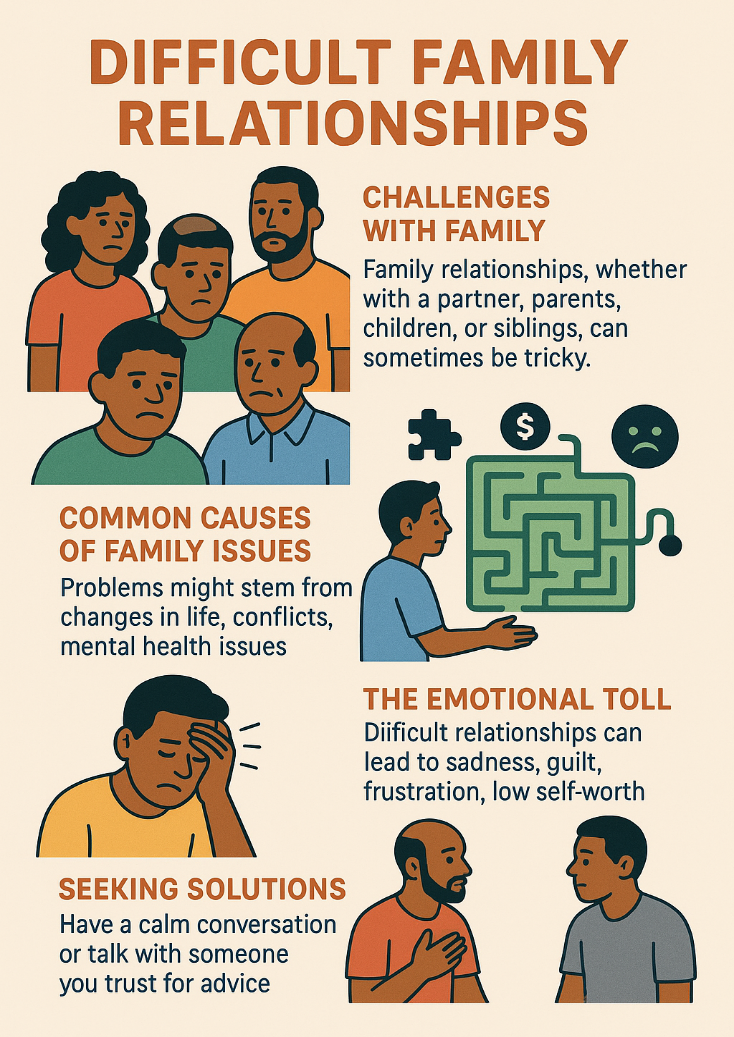 Challenges with Family: Family relationships, whether with a partner, parents, children, or siblings, can sometimes be tricky. Healthy family dynamics can provide emotional support, safety, and love, but problems often arise due to various stressors, such as communication issues, financial strain, or mental health struggles.
- Common Causes of Family Issues: Problems might stem from a range of factors, including changes in life circumstances, personal conflicts, or mental health issues. It’s important to understand that these challenges don’t define you or your family’s worth, but can be difficult to navigate, like finding your way through a maze.
- The Emotional Toll: Difficult relationships can lead to feelings of sadness, guilt, frustration, or low self- worth. If you’re experiencing emotional pain due to family struggles, take time to talk it through when everyone is calm and receptive.
- Seeking Solutions: When a family relationship is strained, having a calm, honest conversation can help clarify things. If communication doesn’t improve the situation, consider seeking help from someone you trust - a relative, counsellor, or healthcare provider. It’s okay to ask for advice or guidance to make things better.
When Things Get Rough – Common triggers for conflict, and what to do:
- Abuse or Control in Relationships: Sometimes, a partner or family member may attempt to control or harm others through physical violence or emotional abuse. This behaviour can include threats, insults, or belittling actions that make others feel small or scared. If you find yourself in an abusive situation, remember that this is never acceptable and can have serious impacts on the well-being of everyone involved.
- Family Separation: Family separation can bring deep emotional pain, loneliness, and a sense of failure for many men. It can affect sleep, appetite, mood, and even lead to risky behaviours like drinking or isolation. These struggles are common but often go unspoken. Recognising the impact and reaching out for help is a strong and important first step, such as through ‘Dads in Distress’ (see below).
- Emergencies and disasters: Emergencies and disasters can put enormous strain on relationships through financial pressure, housing changes, or trauma. Stress can build up silently, leading to conflict, withdrawal, or emotional exhaustion. It’s normal to feel overwhelmed in these situations. Recognising the mental toll and talking to someone early can help protect both your well-being and your relationships.
- Cultural differences: Moving to Australia can bring major cultural changes that affect family roles and expectations. Men may feel caught between traditions and the new ways their partners or children are adapting to. This can lead to confusion, conflict, or a sense of losing control. Seeking support can help men navigate these differences with understanding and strengthen family connections through change.
- Recognising Harmful Behaviour: If you notice yourself becoming angry or upset and reacting in ways that harm those around you, it’s important to pause and reflect on the impact of your actions. Men often struggle with expressing emotions, especially if they’ve experienced or witnessed similar behaviours in their past. However, recognizing that these actions may hurt others is the first step in changing them.
- Taking Responsibility: The good news is that it’s possible to make positive changes. Seeking help is a strong, positive step toward taking responsibility for your actions and improving your relationships. Counselling or support groups can help you understand and manage your feelings better, leading to healthier, more supportive family dynamics.
Seeking Help
There’s no shame in reaching out for help when things get tough. Whether you’re facing relationship issues, domestic violence, or just need guidance on managing family conflict, there are many support services available to help you. Seeking help isn’t a sign of weakness; it’s about taking care of yourself and the people around you.
Here are some key services for men experiencing family or relationship difficulties:
1800RESPECT – National counselling, information and support service for domestic, family and sexual violence. Available 24/7.
Call 1800 737 732.
Website: https://www.1800respect.org.au
MensLine Australia – Free 24/7 counselling and support for men with relationship, family, and mental health concerns.
Call 1300 78 99 78.
Website: https://mensline.org.au
Men’s Referral Service – Support for men who are using, or are at risk of using, violent or controlling behaviour. Available 24/7.
Call 1300 766 491.
Website: https://ntv.org.au/mrs
Dads in Distress (Parents Beyond Breakup) – Peer support for fathers experiencing separation and family breakdown.
Call 1300 853 437.
Website: https://www.parentsbeyondbreakup.com
Family Relationship Advice Line – Information and support for separation, parenting, and family relationship issues.
Call 1800 050 321.
Website: https://www.familyrelationships.gov.au
Relationships Australia – Counselling, family support, and behaviour change programs.
Call 1300 364 277.
Website: https://www.relationships.org.au
South Australian Domestic Violence Crisis Line – 24-hour crisis support (SA).
Call 1800 800 098.
Additional support (general and crisis):
Lifeline – 24/7 crisis support and suicide prevention.
Call 13 11 14.
Website: https://www.lifeline.org.au
Aboriginal and Torres Strait Islander support:
13YARN – 24/7 culturally safe crisis support.
Call 13 92 76.
Website: https://www.13yarn.org.au
Aboriginal Family Support Services (SA) – Family and domestic violence support.
Call (08) 8205 1500.
Website: https://www.afss.com.au
Nunkuwarrin Yunti – Aboriginal health and wellbeing services in SA.
Website: https://nunku.org.au
These services can help you with counselling, conflict resolution, and legal advice. Don’t hesitate to reach out - there is no shame in asking for help, and the support you need is just a phone call away.
Remember, no matter how tough things get, you don’t have to shoulder the burden alone. Whether it’s improving your friendships, working through family issues, or addressing problems in your personal relationships, support is available. Take that first step towards positive change today.