
10, 11, and 19: Deciding When to Get a Health Check
Taking control of your health begins with awareness, and completing this questionnaire is a great first step.
Many serious health issues like heart disease, stroke, diabetes, and even some cancers are preventable or more easily treatable with early detection.
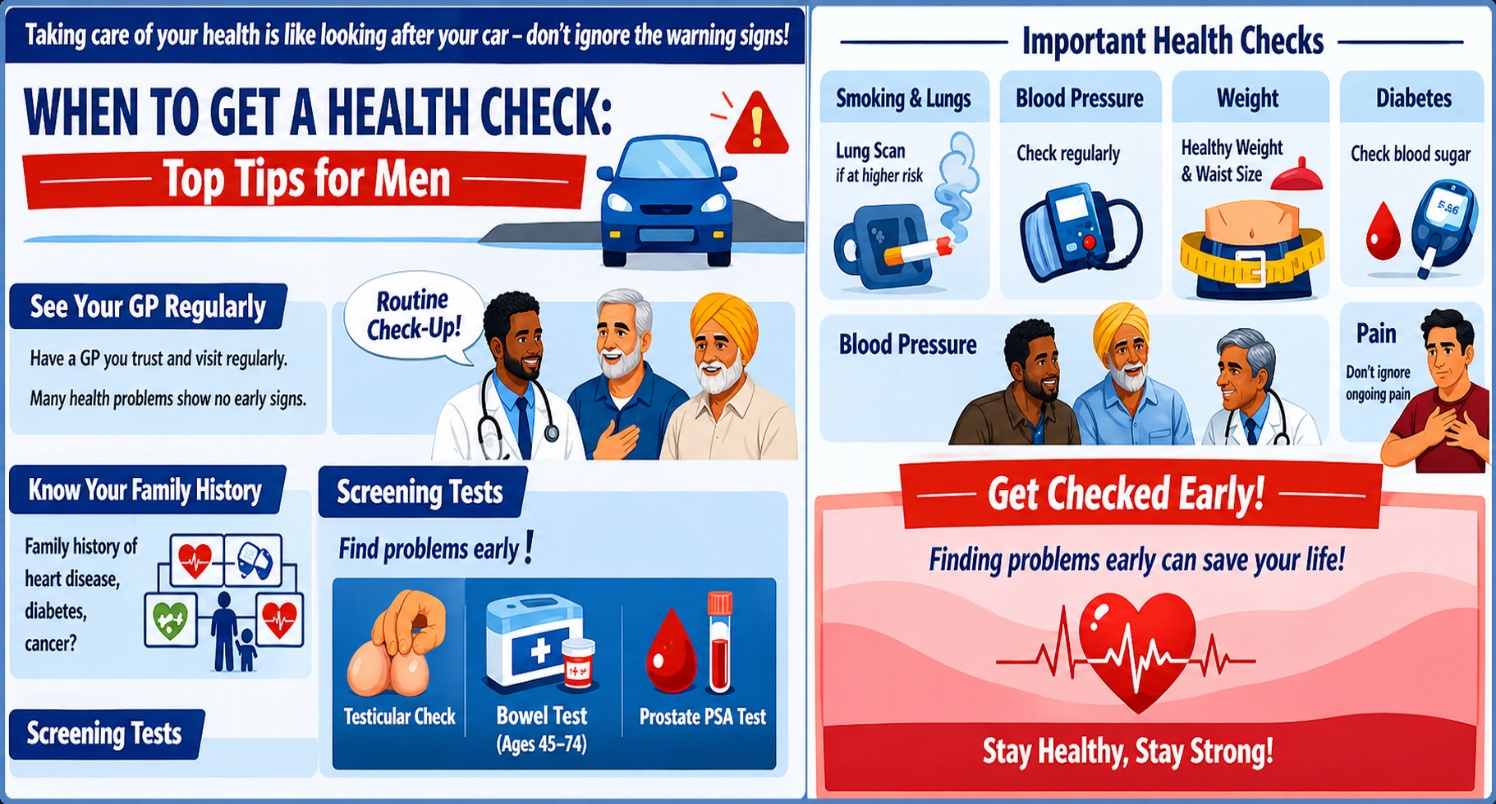
Ignoring potential health risks is like ignoring a warning light in your car—it can lead to catastrophic consequences if left unchecked.
Top Tips for Action: It is a good idea for all men to have a GP they trust. Seeing your GP routinely for assessments, even when you feel well, can be lifesaving. Many diseases do not have any signs or symptoms until they are advanced, so proactively engaging with your GP can be important. Much like servicing your car can prevent a breakdown, a routine GP visit can prevent illness and disease. Things your GP should review in a routine review include:
- Family History: A family history of health problems such as high blood pressure, heart disease, diabetes, or cancer increases your own risk. If you know your family’s medical background, make sure to inform your GP. Undergo regular health checks as recommended.
- Screening: Even without a family history of disease, screening is available and important to because it provides the chance to catch potential issues early before they become serious.
- Testicular cancer: Testicular cancer is the most common cancer in younger men. It is most easily treatable if detected early. Early detection depends on you examining your own testicles by rolling each one between your thumb and forefinger. if you notice a lump, swelling, a change in size or shape, a feeling of heaviness, or an ache in the testicle or scrotum, see your GP as soon as possible.
- Bowel Cancer: The test involves taking 2 small samples of poo in private at home. In Australia, men aged 45 to 74 can do free bowel cancer screening every 2 years. Men aged 50 to 74 are usually sent a kit in the mail. Men aged 45 to 49 can ask for their first free kit https://www.ncsr.gov.au/bowel-program/manage-your-participation-in-the-bowel-program/request-a-free-bowel-test-kit. If you have a family history of bowel cancer, tell your GP, because you may need a different plan or earlier testing. Some men avoid the test because it feels unpleasant or embarrassing. But bowel screening detects cancer early, before you feel unwell, when treatment is more likely to work well.
- Prostate Cancer: The prostate is a small gland found only in men. It is about the size of a walnut. It sits below the bladder and in front of the back passage. Men aged 50 and over should talk with their GP about the pros and cons of prostate cancer testing. Men with a family history of prostate cancer should start this discussion earlier, sometimes from age 45 or even 40, depending on which family members were affected and at what age. Your GP may suggest a blood test called Prostate Specific Antigen (PSA). A raised PSA does not always mean cancer. PSA be increased because of infection, recent sexual activity, or a large prostate without cancer. Your GP can help work out the cause of a raised PSA and arrange any additional tests.
Repeating the measurement over a number of years provides more predictive information, so the earlier you start, the better. It might be the only way to detect prostate cancer early on, while it is still easy to treat. This is because prostate cancer only causes symptoms very late, when it has expanded out of the prostate gland and spread elsewhere.
- Lung Cancer: If you smoke now or used to be a smoker and quit within the last 10 years, talk to your GP about lung cancer screening. In Australia, there is now a free lung cancer screening program for people aged 50 to 70 who have no symptoms. The screening test is a low-dose CT scan. Lung cancer can grow for a long time without symptoms. Early screening is important for men at high risk. Finding lung cancer early provides the best chance of a cure.
- Blood Pressure: High blood pressure usually has no warning signs. You can feel completely well and still have it. Over time, it can damage your heart, brain and kidneys. All adult men should have their blood pressure checked regularly. For many men, at least every 2 years is sensible, and more often if it has been high before or if you have diabetes, kidney disease, are overweight, or smoke.
- Healthy Weight: A healthy weight helps lower your risk of diabetes, heart disease, stroke, sleep apnoea and some cancers. Ask your GP to check your weight, Body Mass Index (BMI) and waist size.
- Diabetes: Type 2 diabetes can develop slowly and may cause no symptoms at first. It can damage the eyes, kidneys, nerves, heart and blood vessels. Men over 40 should talk to their GP about diabetes risk, especially if they are overweight, have a large waist, have high blood pressure, a family history of diabetes, are shift workers and/or are not very physically active. Your GP may use a simple diabetes risk check and may order a blood test if needed. Finding diabetes early gives you the best chance to reverse the disease and prevent complications.
- Pain: Pain is your body’s warning signal. Pain that is severe, keeps coming back, wakes you from sleep, or does not go away should not be ignored. Ongoing pain in the chest, stomach, back, testicles, when passing urine, or during bowel motions should be checked by your GP. New pain can sometimes be the first sign that something is wrong. Getting it checked early is safer than waiting and hoping it will settle.
Know your numbers: Knowing your key health numbers helps you understand your risk and act early. Ask your GP to check:
• Blood pressure: around 120/80 mmHg is considered healthy
• Blood glucose (fasting): 4.0–5.4 mmol/L is considered normal
• HbA1c (long-term blood sugar): below 5.7% (39 mmol/mol)
• Total cholesterol: below 5.5 mmol/L (lower if high risk)
• LDL (“bad” cholesterol): below 2.0–2.5 mmol/L depending on risk
• HDL (“good” cholesterol): above 1.0 mmol/L
• Triglycerides: below 2.0 mmol/L
• Body Mass Index (BMI): 18.5–24.9
• Waist circumference: less than 94 cm for men
Regular checks help identify problems early, even when there are no symptoms.
Other warning Indicators that mean you should get a prompt health check
When you notice something is not quite right with your health, it’s essential not to ignore the signs. Men often avoid seeking help, either due to pride or fear of worrying others. This can lead to worsening health conditions. It is important to recognise you can only fulfill your duty to yourself and your loved ones when you are healthy yourself, so recognising the warning signs is important. Key warning signs include:
- Trouble with sexual performance
- Chest tightness or pain (don’t just assume it’s indigestion)
- New or worsening shortness of breath
- Frequent nighttime urination, or difficulty passing urine
- Persistent thirst
- Unexplained weight loss, loss of appetite, stomach pain, nausea, or vomiting
- Change in bowel habit or blood mixed in with your poo
- Persistent cough more than 2 weeks
- Frequent headaches, changes in vision, or dizziness
- Difficulty sleeping
- Irritability, fatigue, or trouble concentrating
- Persistent sadness or anxiety
- Sudden hearing loss or difficulty hearing
Don’t wait for serious health issues to develop. Be proactive about your health.
- Know your family history, if possible.
- Adhere to screening guidelines.
- Know the warning signs and act on them promptly.
- Regular check-ups with your GP are key.
Every man deserves to feel confident and informed when it comes to his health.
Understanding your body, knowing what’s changed, and being clear about your concerns can
help you get the right care when you see a doctor.
As a healthcare consumer in Australia, you have the right to be heard, to ask questions, and to take part in decisions about your treatment. This is especially important for men from diverse cultural backgrounds, who may face different expectations or barriers when it comes to seeking help.
Your rights are outlined in the Australian Charter of Healthcare Rights. These include:
- Access
You have the right to access healthcare services and treatment that meet your needs. - Safety
You have the right to receive safe and high-quality care. - Respect
You have the right to be treated with respect, dignity, and consideration of your culture, beliefs, and values. - Partnership
You have the right to be included in decisions about your care. You can ask questions, discuss options, and agree to or refuse treatment. - Information
You have the right to clear and understandable information about your health, tests, treatments, and costs. You can ask for an interpreter if needed. - Privacy
You have the right to have your personal and health information kept private and secure. - Give feedback
You have the right to provide feedback or make a complaint about your care without it affecting your treatment.
If something is not clear, you can ask your GP or health worker to explain it again. You can also bring a support person or request an interpreter to help you understand and make decisions.
Going into a consult with knowledge – about your symptoms, your family history, or how you’re feeling – gives you a stronger voice. You don’t have to have all the answers, but you do have the right to speak up and be supported.
Taking care of your health is essential—your well-being is worth the effort!