
12. Mental Health: Understanding and Managing Depression and Anxiety
Everyone feels stressed, worried, down, angry, or overwhelmed at times, and this can happen in response to everyday problems such as work pressure, money worries, relationship difficulties, family responsibilities, poor sleep, illness, grief, or major life changes. For many men, this may show up as feeling tense, flat, irritable, tired, withdrawn, or not quite themselves for a period. It does not always mean that something is seriously wrong. Often, these feelings improve when the stress settles or when a person gets some support, rest, and time to recover.
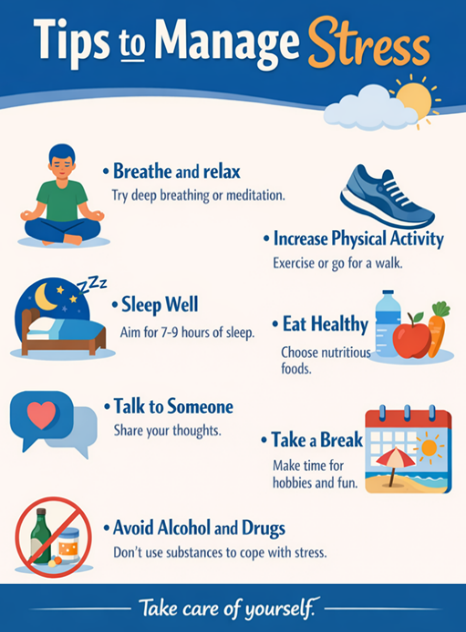 Tips to Manage Stress
Slow down, take a few slow breaths and give yourself a moment before reacting.
Keep a routine. Try to eat, sleep, and get up at regular times
Increase physical activity. Regular physical activity and stretching can help reduce stress.
Cut back on alcohol. Alcohol can make stress, sleep, and mood worse.
Take a break. Spend some time doing something calming or enjoyable each day.
Focus on one thing at a time. Break big problems into small, manageable steps.
Get help early. If stress is not improving or is affecting daily life, seek support. Speak with a friend, family member, or your GP if things are building up.
If these feelings become stronger, last longer, or start to affect sleep, work, relationships, concentration, physical health, or the ability to cope with daily life, it may be more than everyday stress. It may be depression and/or anxiety; these are real health concerns that can occur in both men and women and at any age. Men, however, experience and respond to mental health concerns differently from the way women do. Some men feel sad or worried, but others may mainly feel angry, restless, exhausted, emotionally numb, or may withdraw from other people, drink more alcohol, take more risks, or throw themselves into work instead of recognising that they are struggling.
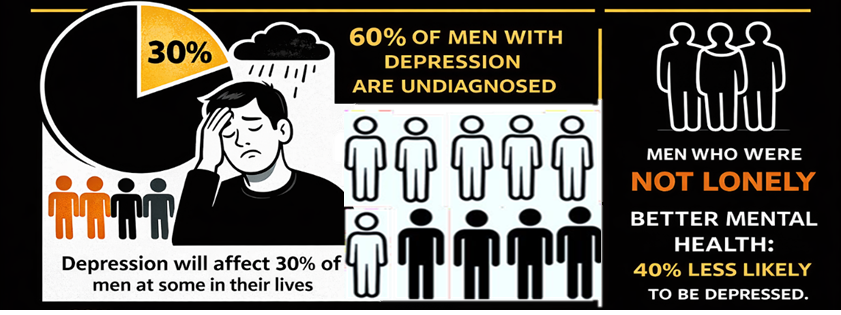 In Australia, approximately 25%-30% of men will experience depression at some point in their lives.
Anxiety, similarly, is more than just occasional stress or nerves. It’s a serious condition that can cause persistent worry, tension, and a feeling of being on edge. Many men will face anxiety at some point. It’s not a sign of weakness; it’s an indication that something is going on in your body that needs attention, much like any physical illness or injury.
How Depression and Anxiety Affect Men
Depression and anxiety don’t affect everyone the same way, and the experience of these problems differs in men as compared to women. Here’s how these conditions can impact us:
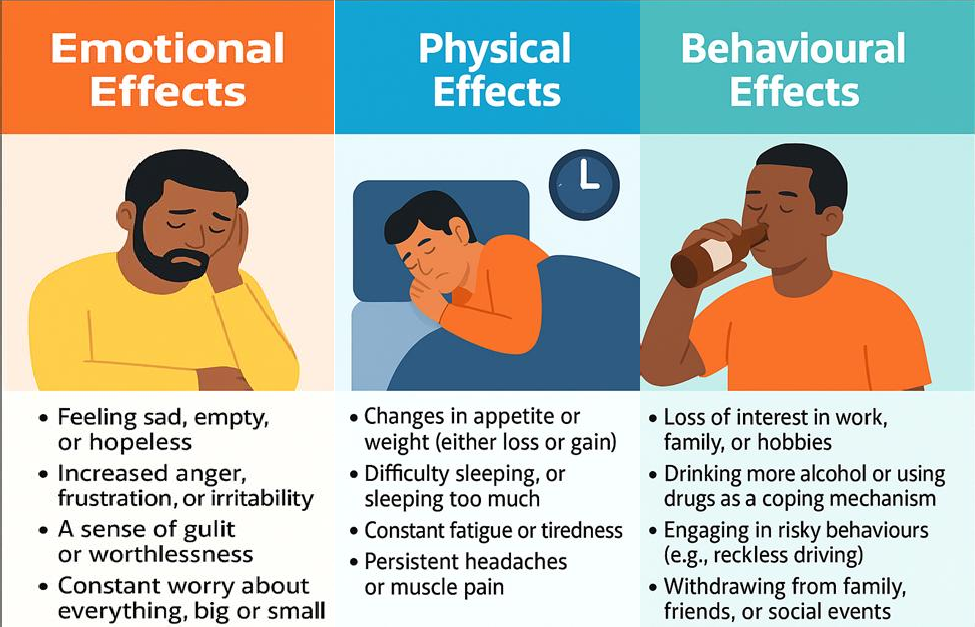
Emotional Effects:
-
- Feeling sad, empty, or hopeless
- Increased anger, frustration, or irritability
- A sense of guilt or worthlessness
- Constant worry about everything, big or small
Physical Effects:
- Changes in appetite or weight (either loss or gain)
- Difficulty sleeping, or sleeping too much
- Constant fatigue or tiredness
- Persistent headaches or muscle pain
- Racing heart, excessive sweating, or dizziness
Behavioural Effects:
- Loss of interest in work, family, or hobbies
- Drinking more alcohol or using drugs as a coping mechanism
- Risky behaviours (e.g., reckless driving)
- Withdrawn from family, friends, or social events.
Here is an example of how depression has affected Alex, a 36-year-old father of two.
Alex, 36: “Alex is a 36-year-old father of two who used to be the first to crack a joke or fire up the barbecue on weekends. But over the past few months, his friends and family noticed he’d changed. He stopped coming to family gatherings, looked noticeably thinner, and was drinking more often – sometimes skipping meals entirely. His wife said he seemed distant and low, but brushed it off when she asked if he was okay.
One evening, Alex’s mate Jordan dropped by after work. Instead of ignoring the signs, Jordan sat with him and gently said, “I’ve noticed you’ve been a bit off lately – not like yourself. I’m worried about you. Want to talk about it?” At first, Alex hesitated, but the quiet check-in gave him space to open up. He admitted he’d been feeling overwhelmed, not sleeping, and using alcohol to cope.
Jordan encouraged him to see his GP and offered to go with him if needed.
With support, Alex made an appointment and started getting the help he needed – not just for his mental health, but also for his drinking and weight loss. It all started with a mate who asked the question and listened without judgment.
Alex could be any man, at any stage of life. Recognising depression and anxiety, in yourself and others, is important to intervene early.
What Can You Do?
If you’re feeling overwhelmed by depression or anxiety, there are several steps you can take to manage and improve your mental health:
- Talk with somebody: Talking to a friend, family member, or a professional can make a big difference. Sometimes, just talking can ease the load.
- See Your GP: A general practitioner can help assess your situation and discuss treatment options, whether it’s therapy, medication, or a combination of both.
- Keep Active: Exercise is one of the best ways to improve mental health. A walk, a run, or even a game of footy can help clear your mind and boost your mood.
- Practice Mindfulness: Techniques like deep breathing, meditation, or mindfulness exercises can help manage stress and reduce the symptoms of anxiety.
- Steer Clear of Alcohol and Drugs: While these might seem like quick fixes, they can worsen the problem in the long run, making symptoms harder to manage.
Remember, you’re not alone in this. Reaching out for help is not a sign of weakness; it’s a step toward getting better. Mental health is just as important as physical health, so take care of yourself and seek support when you need it.
Where to get help - Resources for Men in Adelaide, Australia
If you’re seeking additional support, there are several resources in Adelaide and across Australia dedicated to men’s mental health
Call Triple Zero (000) for an acute mental health crisis when there is an immediate risk of harm, including:
-
-
-
- Threats or attempts to harm yourself
- Threats or attempts to harm others
- Severe agitation, psychosis, or loss of contact with reality
- Behaviour that is unsafe and cannot be controlled
- Inability to care for yourself due to extreme distress
-
-
- Mental Health Triage Service: This is the first point of contact for urgent, acute, and emergency mental health care. Call 13 14 65 (statewide, 24/7).
- Headspace: Provides free, confidential and anonymous mental health support for young people between 12 years – 25 years and their family.
https://headspace.org.au/explore-topics/for-young-people/multicultural-mental-health-support/
- Community Health Centres: Local centres offer resources and can direct you to services specifically for men.
https://www.chiefpsychiatrist.sa.gov.au/emergency-contacts
- MensLine Australia: Free telephone and online counselling for men. Call 1300 78 99 78 or visit MensLine Australia.
- Beyond Blue: Offers resources specifically for men. Call 1300 22 4636.
- Multicultural Communities Council of SA: Provides support and advocacy for culturally diverse communities in South Australia. Visit MCCSA for more information.
- Nunkuwarrin Yunti: Offers a range of health care and community support services to Aboriginal and Torres Strait Islander people. Visit Nunkuwarrin Yunti or call (08) 8406 1600.
- Thirrili: Provides support to Aboriginal and Torres Strait Islander peoples in the aftermath of suicide or other trauma. Call 1800 805 801.
- Dads In Distress: Provides peer support for separated dads. Call 1300 853 437
- Head to Health: For advice and connection to local mental health services, call 1800 595 212.
- SANE Australia: For people living with a mental illness, call 1800 187 263 or chat online
- STTARS: Thrive and Connect**-** A free service to improve social, emotional and mental health & wellbeing for adults aged 18 years and above from CALD backgrounds, experiencing distress or mental health challenges. Call 8206 8900 or visit www.sttars.org.au
- MoodGYM: A free online cognitive behaviour therapy program.
- Qlife: Offers counselling and referral services for LGBTIQA+ individuals.
If there is a crisis or thinking of harming yourself
- Mental Health Triage Service: 13 14 65 (Statewide, 24/7) - A first point of contact for urgent, acute, and emergency mental health care.
- Lifeline at 13 11 14 right away or head to the nearest hospital.
- Suicide Call Back Service: Call 1300 659 467 for 24/7 support.
- Healthdirect: For general health advice and mental health support, call 1800 022 222.