
15. Obstructed Breathing During Sleep
Obstructive Sleep Apnea (OSA) is a condition in which the airway becomes partially or completely blocked during sleep. OSA results in temporary pauses in breathing, reduces the amount of oxygen in the blood, disrupts sleep and can result in serious long-term health issues.
Prevalence and Risk Factors: OSA is common and affects nearly half of all men over the age of 40. The risk increases with age and obesity, but it can occur in men of any body type. It is possible to have OSA even if you believe you are sleeping well. Snoring is a common symptom or marker of upper airway narrowing, but not all snoring is OSA, and OSA can occur without obvious snoring
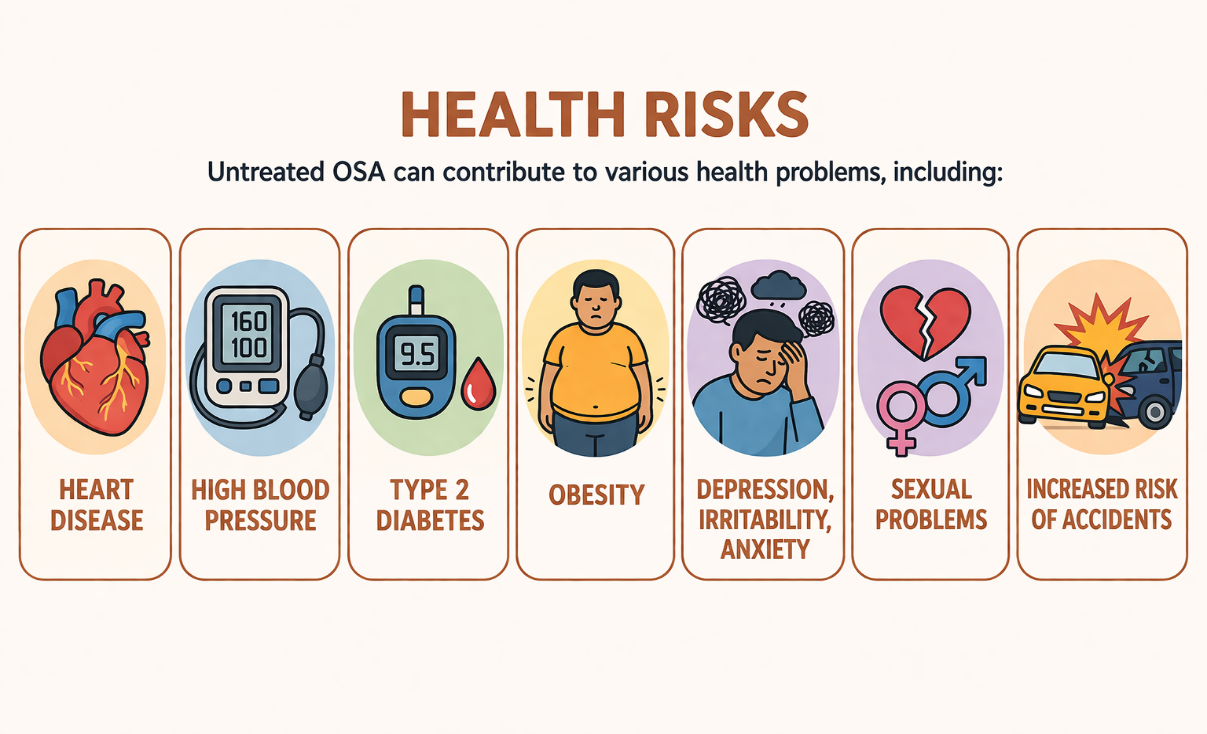
Health Risks: Untreated OSA can contribute to various health problems, including:
Signs and Symptoms: You may suspect you have OSA if you experience any of the following:
 Family history of OSA
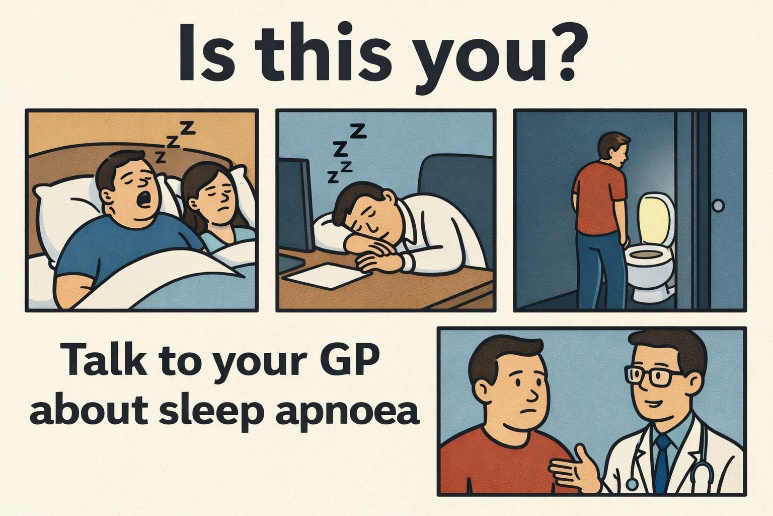
- Loud snoring
- Partner notices pauses in breathing while sleeping
- Frequent nighttime urination
- Morning headaches
- Fatigue, lack of energy, or daytime sleepiness
- Brain fog and poor concentration
- Difficulty managing high blood pressure
What to Do: If you suspect OSA, consult your GP, who can arrange a sleep study. A sleep study can be done at home for your convenience. Effective treatments are available, and addressing OSA can lead to improved health, better sleep quality, and overall well-being.
Fast Facts about OSA
- In an Australian community study, 58% of men aged 46–69y ears had OSA of any severity, and 20% had moderate to severe OSA.
- 80% of adults with moderate to severe OSA are estimated to be undiagnosed.
- Men with mild OSA have an 18% increased likelihood of high blood pressure, 32% high with moderate OSA and 56% higher with severe OSA
- In men with difficult to control blood pressure 70–83% may have OSA
- Aa 2.4 fold higher risk of motor vehicle crashes
- A 3-fold risk of cardiovascular events